

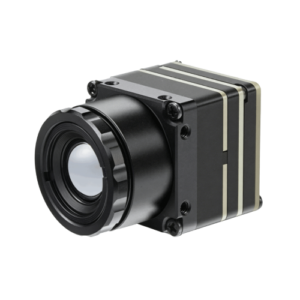
Next-Gen Tactical Optoelectronics: Laser Target Designator OEM/ODM
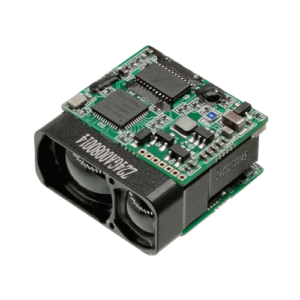
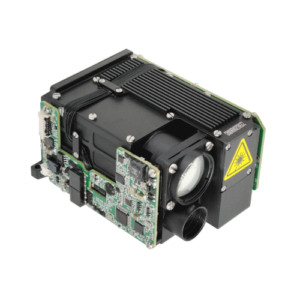
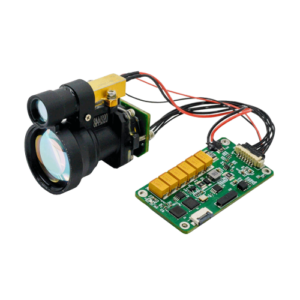
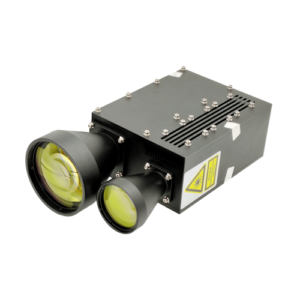
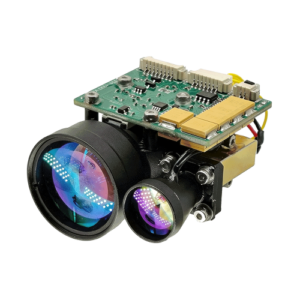
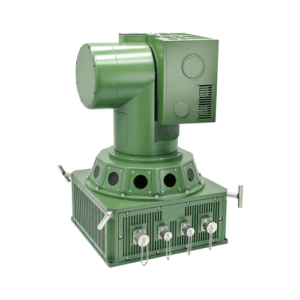
A precision Laser Target Designator (LTD) OEM/ODM solution delivers custom-engineered, diode-pumped solid-state (DPSS) 1064 nm laser transmitter cores that meet strict Size, Weight, Power, and Cost (SWaP-C) limitations for unmanned and gyro-stabilized payloads. These tactical laser systems emit tightly encoded optical energy to illuminate targets for terminal-phase semi-active laser (SAL) homing munitions in accordance with NATO STANAG 3733 standards. Through custom optomechanical engineering, aerospace primes obtain conduction-cooled, shock-isolated sub-assemblies designed for immediate integration into multi-spectral defense turrets.
Modern defense environments demand rapid sensor convergence across contested domains. Multi-rotor drones, loitering munitions, and tactical ground vehicles can no longer support vintage, bulky laser transmitters requiring high-voltage power feeds and liquid cooling reservoirs.
Payload program managers require custom solutions built upon validated advanced laser technology. Integrating high-performance laser cavities into constrained gimbal volumes demands precision optical engineering, thermal modeling, and strict compliance with defense environmental mandates.
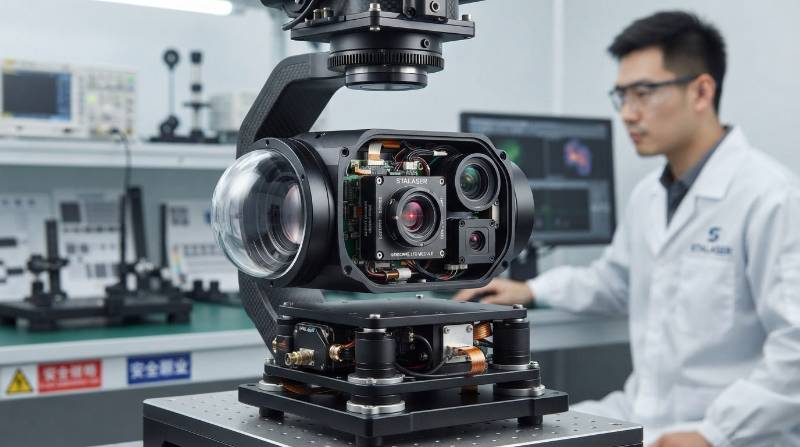
The Stalaser 5-Dimensional LTD Evaluation Framework
Selecting an OEM laser designator module requires looking past generalized datasheets. Standard catalog items often fail during flight testing due to thermal beam wander, electromagnetic interference (EMI), or timing jitter.
To eliminate integration risks early in development, Stalaser evaluates all designator architectures using a rigorous engineering model: the Stalaser 5-Dimensional LTD Evaluation Framework. This methodology establishes strict thresholds for tactical payload survivability and weapon compatibility.
Stalaser 5-Dimensional LTD Evaluation Framework: A vendor-neutral engineering standard that qualifies tactical laser designator modules across five mission-critical axes: Spatial Energy Density (M² ≤ 1.3), Code Fidelity (Δt < 5 ns), Conduction Thermal Capacity (+71°C uncooled operation), Athermal Boresight Retention (≤ 0.08 mrad drift), and Export/ITAR-Free Agility.
| Evaluation Dimension | Legacy Flashlamp Benchmark | Standard Commercial DPSS | Stalaser Tactical OEM Standard |
|---|---|---|---|
| 1. Spatial Energy Density | M² ≥ 2.5; Divergence > 0.6 mrad | M² ≤ 1.8; Divergence ~ 0.4 mrad | M² ≤ 1.3; Divergence ≤ 0.3 mrad |
| 2. Code Fidelity & Jitter | Δt = 15–25 ns (Variable) | Δt ≤ 8 ns (Ambient only) | Δt < 3.5 ns (-40°C to +71°C) |
| 3. Thermal Duty Cycle | Requires Liquid Closed-Loop | Short bursts (De-rates at +50°C) | Pure Conduction (+71°C Continuous) |
| 4. Athermal Boresight | Drift > 0.4 mrad over temp | Drift ~ 0.2 mrad (-20°C to +50°C) | Drift ≤ 0.08 mrad (-40°C to +71°C) |
| 5. Export / Regulatory | Strict ITAR Military Controls | Dual-Use (Regionally Constrained) | Agile Dual-Use / ITAR-Free Available |
Adhering to this evaluation framework ensures that optical designers avoid the common pitfall of selecting a laser that generates high nominal pulse energy but fails to focus that energy on target at operational stand-off distances.
DPSS vs. Flashlamp Architectures in Compact Tactical Gimbals
For decades, tactical designation relied on flashlamp-pumped Nd:YAG resonators. While capable of producing large pulse energies (100–250 mJ), their conversion efficiency remains under 1%, converting over 99% of input power directly into waste heat.
Flashlamp systems require massive pulse-forming networks, operating voltages surpassing 800 VDC, and bulky liquid-to-air cooling radiators. In our manufacturing experience, retrofitting flashlamp modules into modern airborne gimbals severely strains turret SWaP budgets.
By eliminating high-voltage charging units and plumbing lines, DPSS modules decrease overall transmitter volume by up to 70%. Maintenance intervals also increase dramatically: diode pump bars exceed 107 pulses, whereas flashlamps degrade rapidly after 105 discharges.

Engineering Thermal Management & Athermal Optomechanics
Airborne optoelectronic payloads operate within sealed turrets that trap internal heat. When exposed to solar loading, internal chassis temperatures routinely reach +71°C.
Uncontrolled thermal expansion creates mechanical stresses across optical mounts, warping laser resonators and driving beam boresight wander. In weapon guidance scenarios, a boresight drift of just 0.3 mrad displaces the designation spot by 1.5 meters at a 5-kilometer range, risking precision-guided munition misses.
Stalaser solves this mechanical instability through athermalized optomechanical designs. We manufacture laser crystal benches and mirror mounts using matched coefficients of thermal expansion (CTE), pairing precision Invar and Grade 5 Titanium flexures.
Based on our CNC production and interferometer testing data, direct chassis conduction heat-pipe loops transfer waste heat away from the active diode stacks to payload mounting cold plates. This keeps resonator alignment locked across the entire operating range defined by ISO 9001:2015 quality manufacturing standards.
During thermal shock testing per MIL-STD-810H Method 503.7, Stalaser LTD modules show less than 0.08 mrad of cumulative angular wander between -40°C and +71°C, without requiring thermoelectric coolers (TECs) or fans.

STANAG 3733 Compliance: PRF Code Fidelity & Seeker Interoperability
Laser guided munitions depend on exact temporal intervals to differentiate friendly designation spots from battlefield clutter, reflections, or optical countermeasures. Laser seekers tracking targets cross-correlate incoming energy pulses with pre-programmed Pulse Repetition Frequency (PRF) timing codes specified in NATO STANAG 3733 (Band I and Band II).
If an emitted pulse slips outside the expected arrival gate by more than ±10 nanoseconds, the semi-active seeker’s digital filter rejects the signal. This timing failure breaks terminal guidance lock and causes the weapon to drift ballistic.
Stalaser designator cores integrate an onboard FPGA timing controller paired with high-voltage, temperature-compensated electro-optic (EO) Pockels cell Q-switches. This setup eliminates thermal switching delays common in passive or low-grade active Q-switches.
We verify pulse-to-pulse timing jitter across all Band I and Band II PRF codes to be under 3.5 ns throughout the entire military thermal envelope. Integrators designing comprehensive countermeasure systems can evaluate these optical dynamics alongside our tactical laser warning receiver platforms.
Dual-Mode Mission Payloads: 1064nm Designation and 1535nm Eye-Safe Ranging
Tactical reconnaissance platforms require both weapon designation and continuous target ranging. However, using a 1064 nm designating laser for routine telemetry creates significant operational safety risks during crewed joint exercises.
1064 nm radiation penetrates directly through the human cornea to the retina, posing severe eye-damage hazards over long distances. Combining an eye-safe wavelength into the optical suite allows operators to conduct frequent ranging and target tracking safely during routine training.
Stalaser solves this payload dilemma by offering co-aligned, dual-mode optical engines. We integrate a high-power 1064 nm DPSS designator alongside an eye-safe Erbium-glass (1535 nm) laser rangefinder module onto a single rigid optical chassis.
This dual-wavelength architecture delivers several distinct operational advantages:
- Common Optical Apertures: Shared output collimators reduce frontal aperture diameter, cutting overall payload drag and gimbal window size.
- Shared Telemetry Electronics: Integrated FPGA processing handles both high-frequency 1535 nm telemetry and STANAG 1064 nm designation firing sequences.
- Boresight Alignment: The 1064 nm and 1535 nm laser paths are factory-aligned to within 0.05 mrad of coaxial parity, ensuring that your ranging coordinates point directly to your munition impact basket.
- Application Flexibility: Easily scaled for defense setups as well as heavy-duty industrial measurement solutions operating in high-vibration conditions.
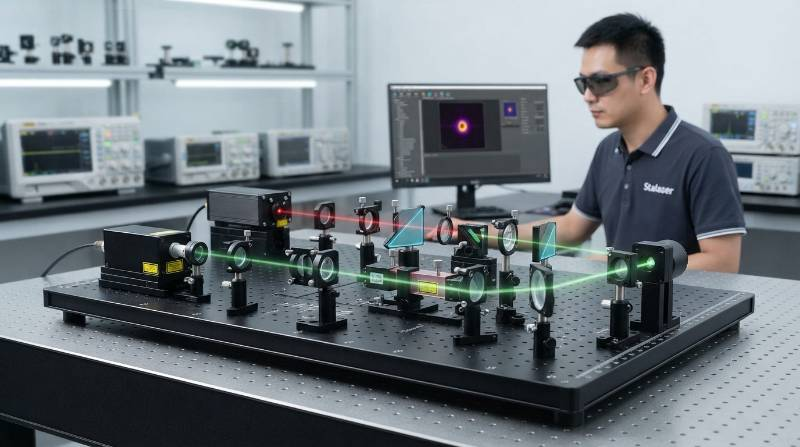
Niche Scenario: Benchmark DPSS Module for Class 1–3 UAV Turrets
Small Class 1–3 Unmanned Aerial Systems (UAS) operating multi-sensor turrets under 5 kg historically lacked the payload capacity to carry combat-effective laser target designators. Integrators were forced to accept low-power markers or rely on external designation assets.
Stalaser solves this operational bottleneck with our specialized low-SWaP DPSS designator module, engineered specifically for small drone gimbals.
| Parameter | Measured Value | Integration Note |
|---|---|---|
| Designation Wavelength | 1064 nm ± 0.5 nm | Standard SAL seeker band |
| Pulse Output Energy | 50 mJ to 80 mJ (Software adjustable) | Meets NATO operational stand-offs |
| Integrated Ranging Channel | 1535 nm Eye-Safe Class 1 / 1M | Accurate ranging from 50 m to 12 km |
| Total Module Mass | ≤ 320 grams | Enables mounting in < 5 kg turrets |
| Module Dimensions | 112 mm × 58 mm × 44 mm | Fits alongside MWIR thermal sensors |
| Power Consumption | < 28 W during continuous firing | Minimal battery draw on UAV bus |
| Cooling Architecture | 100% Chassis Conduction | No internal pumps, TECs, or coolant |
| Shock Rating | 1000G @ 0.5 ms half-sine | Withstands hard catapult launches |
This compact footprint enables tactical defense contractors to integrate true STANAG-compliant targeting capabilities directly into front-line scout units. Explore our dedicated applications in drone UAV payloads to review compatible gimbal configurations.
Manufacturing Rigor, Cleanroom Protocols & Defense Qualification
High-energy pulsed lasers are sensitive to microscopic contaminants. Even trace chemical outgassing or dust particles on an internal crystal face will cause Laser-Induced Damage Threshold (LIDT) failure when subjected to gigawatt-level intracavity power densities.
Stalaser manufactures every LTD core within certified ISO 9001:2015 cleanroom environments, utilizing Class 10,000 facilities with localized Class 1,000 laminar flow benches for active optical assembly. Automated multi-axis active alignment systems position internal mirrors to tolerances tighter than 5 microradians.
Every serial production unit passes through a rigorous qualification and burn-in sequence:
- Environmental Stress Screening (MIL-STD-810H): 24-hour thermal cycling from -40°C to +71°C combined with 3-axis sine-on-random vibration profiles.
- Electromagnetic Compatibility (MIL-STD-461G): Radiated emission suppression ensuring high-speed Pockels cell drivers generate zero EMI interference with onboard GPS or UHF comms links.
- Burn-In Endurance: 100% automated endurance firing exceeding 1,000,000 pulses per production lot, verifying an MTBF of over 5,000 operational hours.

Step-by-Step OEM/ODM Integration Roadmap
Integrating a custom laser target designator into an airborne turret or land vehicle mast requires tight co-engineering between your payload team and our laser architects. We use a clear, 3-step action plan to move from initial specs to flight tests quickly.
Step 1: Rapid Requirement Scoping & ICD Assessment
Our engineering team reviews your Interface Control Document (ICD), defining available SWaP budgets, electrical interfaces (RS-422, RS-485, CAN Bus), optical aperture constraints, and target stand-off requirements. Within five working days, we provide a detailed optical mechanical fit study and thermal conduction model.
Step 2: Evaluation Core Deployment
Qualified defense integrators receive a benchtop evaluation kit under NDA within 14 working days. The kit includes a fully functional DPSS laser module, software GUI for STANAG code setting, diagnostic interface harnesses, and real-time beam diagnostic tools for immediate ground verification.
Step 3: Co-Engineering & Serial Production
Stalaser customizes chassis mounting points, connector orientations, and optical coatings to match your payload turret. Once prototype validation and environmental qualification testing are complete, we scale manufacturing using our cleanroom lines to meet your production rate requirements.
Frequently Asked Questions (Laser Designator Engineering)
Why choose a DPSS target designator over flashlamp-pumped systems for UAV payloads?
Flashlamp-pumped lasers rely on low electrical efficiency (< 1%), require bulky high-voltage capacitors (> 800 VDC), and need active liquid cooling pumps that add weight and maintenance concerns. In contrast, Stalaser DPSS designators deliver over 12% conversion efficiency, draw under 28 W of operating power, utilize pure chassis conduction cooling up to +71°C, and exceed 1,000,000 maintenance-free pulses—dramatically reducing SWaP-C across UAV turrets.
How does pulse timing jitter impact weapon seeker lock under STANAG 3733?
Semi-active laser guided munitions utilize narrow temporal arrival gates to verify designating signals against designated PRF timing codes. If pulse jitter exceeds ±10 ns, incoming pulses fall outside the seeker’s tracking filter window, causing the weapon to break track. Stalaser LTD modules integrate FPGA digital triggers and temperature-stabilized electro-optic Pockels cells, keeping temporal jitter below 3.5 ns from -40°C to +71°C to preserve target lock.
How does Stalaser guarantee boresight stability in high-vibration airborne turrets?
Airborne turrets face wide temperature swings and high vibration. Stalaser isolates the optical bench using stress-relieved Titanium and Invar kinematic flexures, custom heat pipes, and ruggedized mirror mounts. This optomechanical assembly limits optical axis drift to below 0.08 mrad under continuous operational load and preserves boresight alignment under 1000G shock loads.
Accelerate Your Program with Stalaser OEM/ODM Solutions
Avoid integration delays and performance issues in your next-generation electro-optical payloads. Stalaser partners directly with defense primes, drone manufacturers, and tactical systems integrators worldwide, delivering ITAR-free, military-tested, high-reliability laser designator modules built to your exact SWaP specifications.
Contact our defense optoelectronics integration team today to discuss your Interface Control Documents, schedule a technical consultation, or request an evaluation core.