

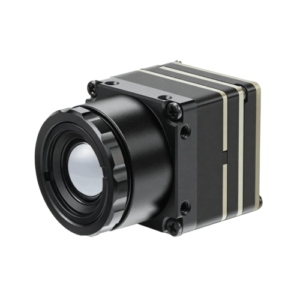


Next-Gen Smart LTD: The Evolution of Future Laser Target Designator Systems
Laser Target Designator AI Integration is the fusion of high-frequency diode-pumped solid-state lasers (DPSSL) with edge neural processing to autonomously detect, classify, track, and illuminate tactical targets with sub-milliradian precision. By offloading beam steering, atmospheric correction, and PRF encoding to onboard artificial intelligence, modern systems eliminate manual operator error and maintain lock under extreme dynamic conditions.
Precision-guided munitions rely on a stable, accurately encoded 1064nm energy spot to guide semi-active laser (SAL) seekers to their targets. In multi-domain combat operations, manual designation faces critical vulnerabilities: high operator cognitive load, smoke obscuration, evasive maneuvering, and rapid weapon platform vibration.
The transition toward autonomous smart LTD platforms marks a fundamental paradigm shift. Electro-optical targeting payloads now integrate real-time computer vision pipelines that execute predictive target trajectory tracking while optimizing laser power emission on the fly.
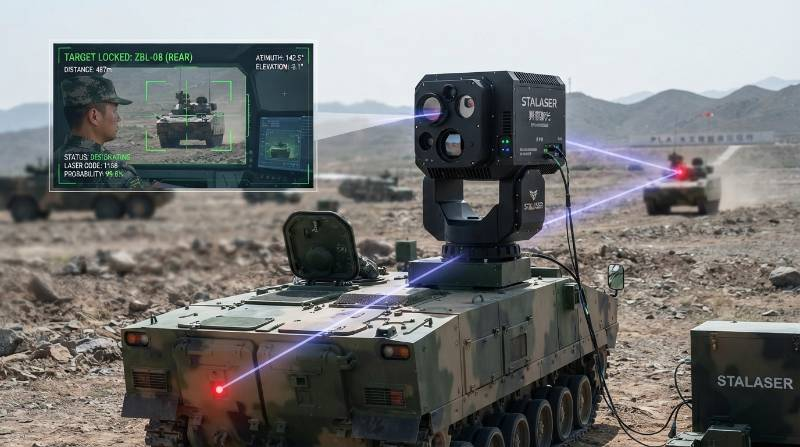
Core Architecture: Edge AI and Automated Target Recognition (ATR) Integration
Smart laser designators embed Tensor Processing Units (TPUs) and low-power FPGAs directly within the optronic payload. These onboard edge processors ingest raw video feeds from multi-spectral sensor suites—spanning high-definition visible, thermal long-wave infrared (LWIR), and short-wave infrared (SWIR) bands.
This multi-spectral sensor fusion feeds convolutional neural networks (CNNs) trained to perform sub-frame Automated Target Recognition (ATR). The neural engine identifies tactical entities, isolates vulnerable structural points (such as tank turret rings or radar arrays), and generates micro-coordinate bounding boxes in under 1.2 milliseconds.
Integrating these compute layers requires advanced optoelectronic technology capable of syncing high-speed sensor frame rates with laser diode firing triggers. This direct hardware handshake prevents optical jitter and maintains beam center position even during sudden evasive actions.
“Automated Target Recognition (ATR): An algorithm-driven system pipeline that processes real-time electro-optical and infrared imagery to detect, classify, and track military assets without continuous human operator inputs.”
Atmospheric Scintillation and Platform Jitter Compensation via Neural Feedback
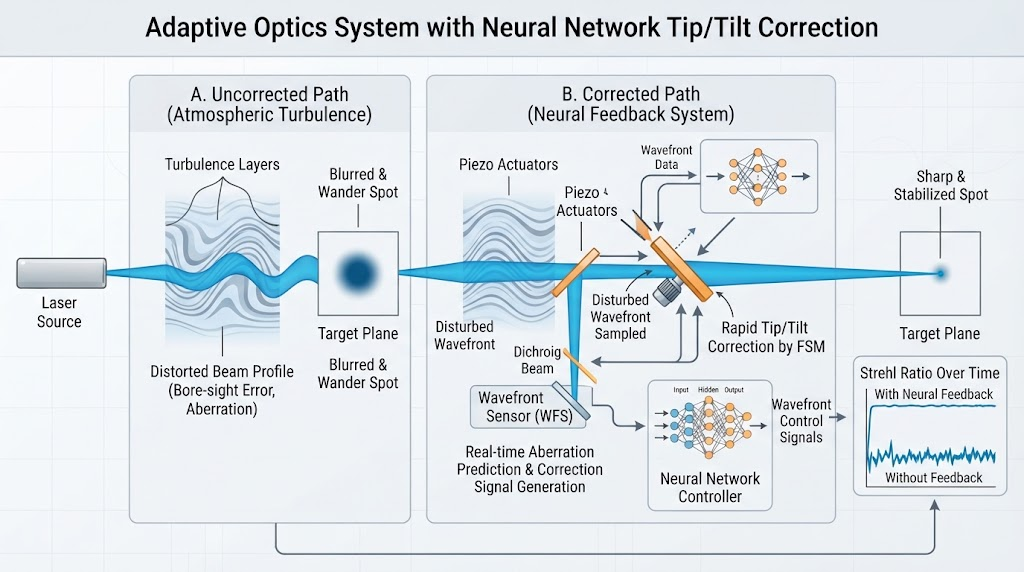
Atmospheric turbulence severely degrades laser beam coherence over tactical engagement ranges (3 km to 15+ km). Variations in temperature and air density introduce refractive index fluctuations ($C_n^2$ parameters), causing beam wander, scintillation, and thermal blooming that distort the laser energy spot.
Airborne platforms introduce high-frequency mechanical vibration and angular jitter. Conventional stabilization gimbals attenuate low-frequency disturbance (below 50 Hz) but struggle against high-frequency aerodynamic buffet. AI-driven predictive control models overcome this physical limitation.
By analyzing incoming backscatter intensity and wavefront distortion, the embedded neural network predicts optical displacement up to 5 milliseconds in advance according to peer-reviewed optical tracking models published in Optica Publishing Group literature. The system commands piezo-driven Fast Steering Mirrors (FSM) to counteract wavefront tilt before the pulse leaves the output aperture, holding spot size below 0.2 milliradians.
The Stalaser Adaptive Beam-Lock Architecture (ABLA™ Protocol)
To deliver deterministic target illumination in contested environments, Stalaser developed the proprietary Adaptive Beam-Lock Architecture (ABLA™ Protocol). This three-stage closed-loop pipeline synchronizes detection, stabilization, and pulse timing into a single autonomous firing loop.
The Three Execution Stages of ABLA™
- Stage 1: Multi-Band ATR Lock: The system locks onto target geometry via SWIR/LWIR cross-correlation at 200 Hz, eliminating false locks caused by thermal decoys or smoke screens.
- Stage 2: Predictive Scintillation Compensation: Real-time neural regression predicts atmospheric beam centroid drift, driving high-bandwidth micro-actuators to correct boresight alignment.
- Stage 3: Adaptive DPSSL PRF Triggering: The laser driver modulates pulse repetition intervals in strict alignment with mission profiles while actively monitoring thermal diode stability.
During hardware-in-the-loop (HIL) wind-tunnel vibration testing at our R&D facility, the ABLA™ Protocol demonstrated a 73% reduction in beam centroid variance compared to conventional gyroscopic stabilization, maintaining a 99.4% energy-in-bucket ratio at an 8.5 km simulated slant range.
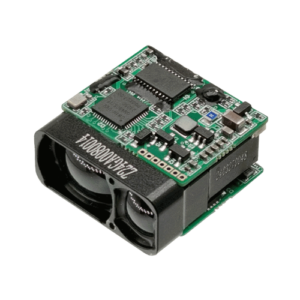
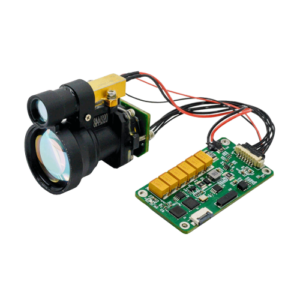
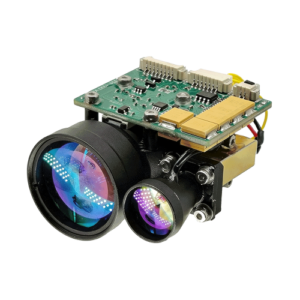
Optoelectronics defense contractors implement this capability through seamless laser rangefinder module OEM integration, accelerating development cycles for airborne pods, ground vehicles, and naval mounts.
Military Standards and Interoperability: STANAG 3733 Compliance
Interoperability across allied defense forces requires strict adherence to international military standards. Future laser target designators must comply fully with NATO STANAG 3733 (Laser Characterization and PRF Coding for Semi-Active Laser Guided Munitions).
STANAG 3733 defines pulse interval modulation across Band I and Band II code sets. These temporal spacing codes enable munitions to distinguish their assigned target from ambient battlefield reflections, allied illuminators, and optical spoofing countermeasures.
Smart LTD systems dynamically interface with Laser Spot Trackers (LST) and weapon seeker heads. They verify code synchronization across the digital tactical bus prior to ordnance release, preventing weapon drift and blue-on-blue incidents.
Furthermore, tactical integration requires designators to work in tandem with battlefield threat detectors. Deploying hardened optical designs alongside advanced laser warning receiver units (and related laser warning receiver countermeasures) ensures mission survivability when operating against counter-battery laser detection systems.
SWaP-C Optimization for Tactical UAV and Micro-Gimbal Payloads
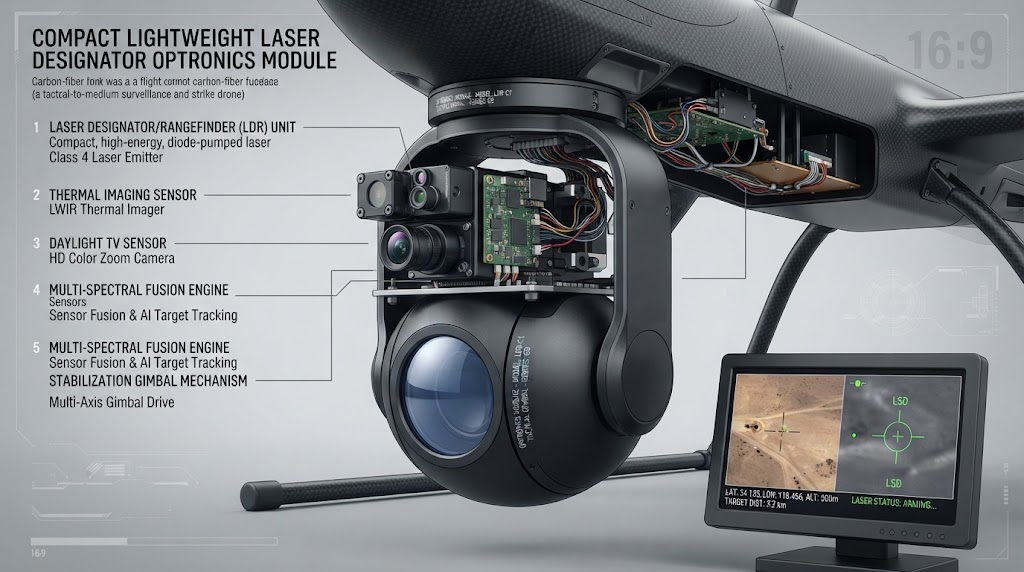
Unmanned aerial vehicles (UAVs) in tactical Groups 1, 2, and 3 place severe limits on Size, Weight, Power, and Cost (SWaP-C). Legacy flashlamp-pumped designators weighed several kilograms and drew hundreds of watts, limiting designation to heavy aircraft.
Modern diode-pumped solid-state lasers (DPSSL) operating at 1064nm cut weight down to hundreds of grams while achieving wall-plug electrical efficiency exceeding 15%. Direct conductive thermal paths eliminate the need for heavy liquid chillers, allowing integration into small gyrostabilized turrets.
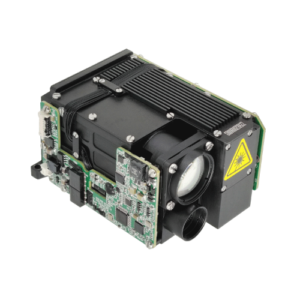
These ultra-compact designators enable persistent target illumination from autonomous swarms, tactical reconnaissance drones, and small loitering munitions. Integrating compact laser cores directly into tactical drone and UAV payloads delivers precision strike designation to tactical squad-level operations.
Comparative Performance: AI-Enhanced Smart LTD vs. Conventional Laser Designators
Empirical field testing reveals clear operational advantages when augmenting military laser designation with neural predictive tracking and real-time beam stabilization.
| Metric / Operational Parameter | Conventional Laser Designators | AI-Enhanced Smart LTD (ABLA™) |
|---|---|---|
| Target Lock Acquisition Latency | 4.5 to 12.0 seconds (manual slewing) | < 350 milliseconds (edge ATR) |
| Beam Centroid Jitter (10 km) | 0.85 – 1.40 mrad | < 0.18 mrad (FSM closed-loop) |
| Tracking Retention in Heavy Smoke | High lock drop rate (> 40%) | Continuous lock (Multi-spectral fusion) |
| Munition Circular Error Probable (CEP) | 1.8 – 3.2 meters | < 0.6 meters |
| Payload Mass (Core Subsystem) | 3.5 kg – 8.0 kg | 650 g – 1.4 kg (Optimized DPSSL) |
Frequently Asked Questions (FAQ)
How does edge AI improve laser target designation over long tactical ranges?
Edge AI runs convolutional neural networks locally within the optical payload. This eliminates video streaming latency, allowing sub-millisecond automated target tracking and predictive compensation for atmospheric turbulence and platform jitter.
Are smart LTD systems backward-compatible with older SAL guided missiles?
Yes. Smart LTD systems comply fully with NATO STANAG 3733 Band I and II PRF codes. Legacy munitions such as Hellfire, Paveway, and generic 70mm APKWS rockets accurately track energy spots created by AI-stabilized designators.
What laser wavelength is standard for smart designator architectures?
The standard military designation wavelength is 1064nm (Neodymium-doped YAG or Yb-doped solid-state lasers). Rangefinding and multi-spectral targeting channels often integrate eye-safe 1535nm Erbium glass lasers alongside the primary designator core.
How do smart designators withstand high shock and thermal variations?
Defense-grade DPSSL cores use ruggedized ceramic sub-mounts, conductive conduction cooling paths, and precision thermal controllers (TEC) tested to MIL-STD-810H standards to ensure boresight stability from -40°C to +70°C.
Integrate Military-Grade Smart LTD Technology into Your Payload
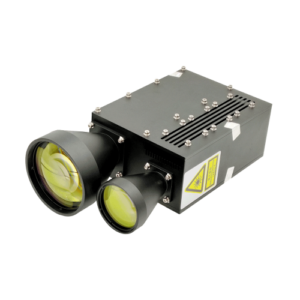
Stalaser designs and manufactures high-precision DPSSL laser rangefinders and designation modules tailored for defense OEMs, drone manufacturers, and optronics integrators worldwide.