

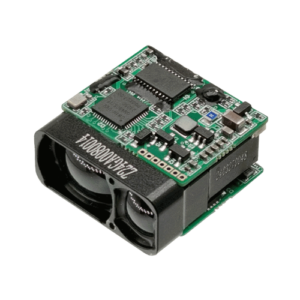
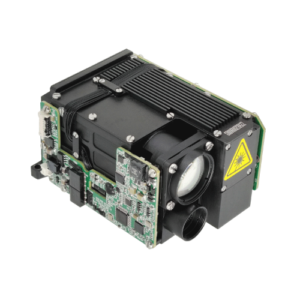
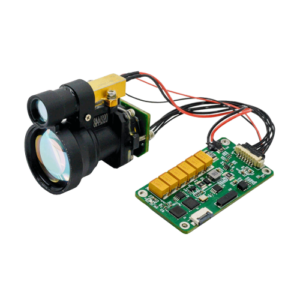
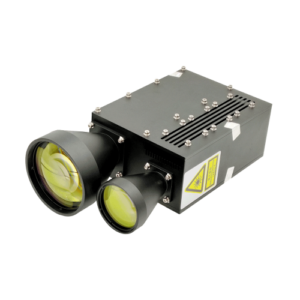
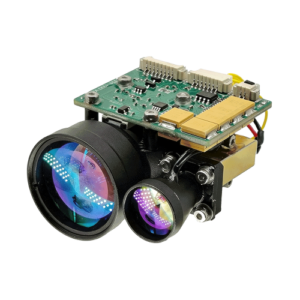
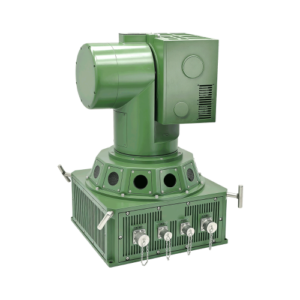
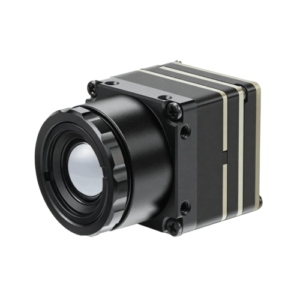


Introduction to Laser Ranging Modules: Precision in Measurement
Understanding the different types of laser ranging modules and their applications is crucial for engineers, developers, and enthusiasts. These compact optoelectronic devices have revolutionized how we measure distance, offering unparalleled precision and speed across countless fields.
A laser ranging module, often referred to as a distance sensor, is a sophisticated tool that uses laser light to determine the distance to an object. Its fundamental purpose is to provide highly accurate, non-contact measurements, enabling a new generation of automated and intelligent systems.
From industrial automation to advanced robotics, the growing importance of these modules cannot be overstated. They are the eyes and ears of modern machinery, providing the critical spatial data needed for complex operations.
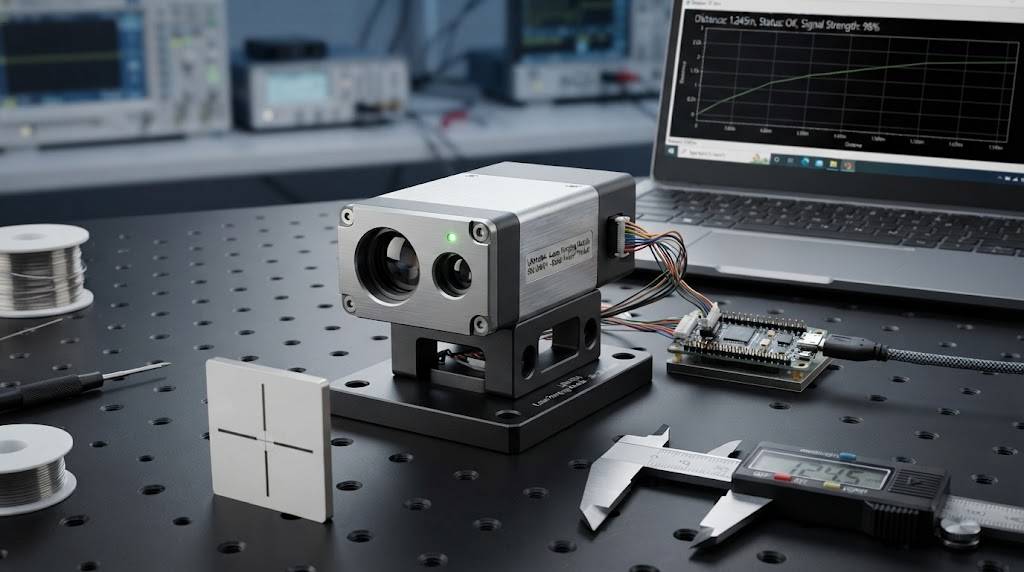
The Core Principles: How Laser Ranging Works
Laser ranging modules determine distance by precisely measuring the time it takes for a laser pulse to travel to a target and return, or by analyzing phase shifts in continuous waves.
This process leverages the constant speed of light. By emitting a laser beam, detecting its reflection from a target, and calculating the travel time, the module can accurately infer the distance. This optical measurement principle forms the backbone of all laser distance measurement technologies.
Laser Ranging Module: An optoelectronic device that calculates the distance to an object by emitting a laser beam and analyzing the characteristics of the reflected light, typically its time-of-flight or phase shift.
The core laser physics behind these devices involves highly collimated light, allowing for focused and directed measurement. This precision is what sets laser ranging apart from other distance sensing methods.
Diverse Types of Laser Ranging Modules and Their Mechanisms
The market offers a variety of laser ranging modules, each employing a distinct operational principle tailored for specific applications. Understanding these differences is key to selecting the right tool for the job.
These laser measurement technologies vary in their range, accuracy, and environmental resilience. Let’s dive into the primary categories of distance sensor types and how they function.
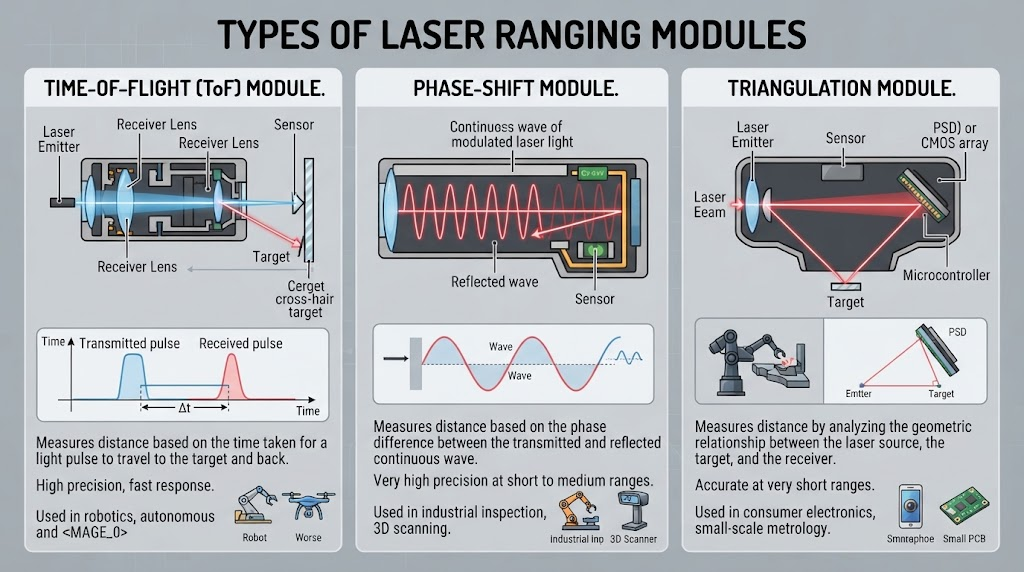
Time-of-Flight (ToF) Modules: Direct Measurement
Time-of-Flight (ToF) modules are perhaps the most common type. They work by sending out a short laser pulse and measuring the exact time it takes for that pulse to reflect off a target and return to the sensor.
This “direct measurement” principle applies to both pulsed ToF and some continuous wave (CW) methods that use modulated light to infer time. Pulsed ToF sensors excel in longer-range applications, offering excellent accuracy over meters or even kilometers.
Typical applications include LiDAR systems, drone altimetry, and industrial process control where rapid response times are critical. Accuracy can range from millimeters to centimeters depending on the module and conditions.
Phase-Shift Modules: High-Precision Ranging
Phase-shift laser modules achieve extremely high precision by emitting a continuous, modulated laser beam. They then compare the phase of the emitted light wave to the phase of the reflected light wave.
The phase difference directly correlates to the distance traveled. This method is outstanding for short-to-medium range applications (< 100 meters) requiring sub-millimeter accuracy, such as precision assembly, quality inspection, and delicate robotic tasks.
While often slower than pulsed ToF for long ranges, their resolution makes them indispensable for critical close-proximity measurements.
Triangulation Modules: Geometric Distance Sensing
Laser triangulation modules operate on a different geometric principle. A laser diode projects a light spot onto the target surface, and a camera or position-sensitive detector (PSD) observes the spot from a known angle.
As the distance to the target changes, the position of the reflected spot on the detector shifts. By using basic trigonometry, the module calculates the exact distance. This method is ideal for very short-range, high-resolution applications like object profiling, part inspection, and robot gripper feedback.
They offer excellent lateral resolution and are less susceptible to target surface reflectivity than some other methods, though their range is typically limited to a few meters.
Pulsed Laser Modules: Long-Range Capabilities
Pulsed laser ranging modules emit discrete, high-power laser pulses. The short duration and high intensity of these pulses allow them to travel long distances and penetrate certain atmospheric conditions more effectively.
These modules are the workhorses for long-range measurement, often extending hundreds or even thousands of meters. Their robust performance makes them suitable for outdoor laser sensor applications, including surveying, military ranging, and large-scale environmental monitoring.
The technology is fundamental to many advanced LiDAR systems, providing reliable data for mapping and navigation.
Continuous Wave (CW) Laser Modules: Cost-Effective Solutions
Continuous Wave (CW) laser modules emit a constant beam of light, often modulated with a specific frequency. Distance is determined by analyzing the phase shift or frequency modulation of the returning light.
These CW ranging devices are often more cost-effective and can be simpler in design compared to pulsed systems. They are excellent for continuous monitoring, proximity sensing, and applications where maintaining a constant distance is key.
While typically limited to shorter ranges than pulsed systems, their reliability and lower cost make them popular for many industrial and consumer-grade laser sensor applications.
Comparative Analysis: Choosing the Right Laser Ranging Technology
Selecting the optimal laser ranging technology hinges on balancing precision, range, speed, and cost against your specific application requirements. There’s no one-size-fits-all solution.
Based on our data from numerous client projects, a careful comparative analysis is essential. For those looking to dive deeper, you can Explore LRF Modules offered by Stalaser.com to see a variety of these technologies in action.
Here’s a breakdown to help you choose between ToF vs. Phase-shift and Triangulation methods:
| Feature | Time-of-Flight (ToF) | Phase-Shift | Triangulation |
|---|---|---|---|
| Principle | Measures time for light pulse round trip. | Measures phase difference of modulated CW light. | Geometric calculation based on projected dot and sensor angle. |
| Typical Range | Long (meters to kilometers) | Medium (up to ~100 meters) | Short (centimeters to a few meters) |
| Accuracy | Centimeter to decimeter (pulsed); millimeter (some modulated CW) | Sub-millimeter to millimeter | Micrometer to millimeter |
| Measurement Rate | Very high (kHz to MHz) | Medium to high (Hz to kHz) | Medium (Hz to hundreds of Hz) |
| Optimal Applications | LiDAR, drone altimetry, outdoor long-range, robotics navigation | Precision industrial measurement, quality control, close-range automation | Object profiling, 3D scanning, small part inspection, robotic gripping |
| Environmental Robustness | Good for outdoor, less affected by ambient light (pulsed) | Sensitive to ambient light, best for controlled environments | Moderately affected by surface texture/color, best for controlled environments |
| Cost | Moderate to High | Moderate | Low to Moderate |
For high-performance applications, Stalaser.com consistently focuses on delivering robust Explore LRF Modules that stand up to demanding conditions.
Key Features and Specifications to Consider
When evaluating laser ranging modules, a deep dive into specifications is non-negotiable. These details directly impact performance and suitability for your project.
- Range: The minimum and maximum distances the sensor can accurately measure.
- Accuracy/Precision: How close a measurement is to the true value, and how repeatable measurements are.
- Measurement Rate: The number of measurements per second, critical for dynamic applications.
- Wavelength: Typically infrared (e.g., 905nm, 1550nm) or visible red light (e.g., 635nm). Shorter wavelengths offer better resolution but can be more sensitive to atmospheric conditions.
- Power Consumption: Important for battery-powered or energy-sensitive devices like drone technology.
- Physical Size: The module’s footprint and weight, crucial for integration into compact systems.
- Interface: Common options include UART, I2C, SPI, or USB for data communication.
- Environmental Ratings: IP ratings for dust and water ingress, and operational temperature ranges.
A senior expert in optoelectronic devices, Dr. Lena Hansen, recently noted, “The true value of a laser ranging module isn’t just its advertised range, but its consistent accuracy under the specific environmental stresses of its intended application.” This highlights the importance of thorough testing.
The 5-Point Laser Module Selection Framework
Choosing the ideal laser ranging module can feel like navigating a maze. To simplify this, we’ve developed The 5-Point Laser Module Selection Framework, a systematic approach designed to guide engineers to the optimal sensor choice.
This proprietary framework helps cut through the noise, ensuring your selection aligns perfectly with your project’s demands. It’s built on years of experience in custom laser solutions and industrial applications.
- Application Requirements: Define the core task. What’s the target object? What range, accuracy, and measurement rate are absolutely essential? Is it static or dynamic? What data output format do you need? This is the starting point for any application specific laser.
- Environmental Factors: Where will the module operate? Indoors or outdoors? What are the typical temperatures, humidity levels, and potential for dust, fog, or rain? Consider ambient light conditions. Robustness is key for many outdoor systems.
- Integration Complexity: How will the module connect to your existing system? What are the mechanical mounting constraints? What electrical interfaces and software protocols (e.g., UART, I2C, SPI) are compatible? Minimizing integration challenges saves time and resources.
- Budget Constraints: Establish a realistic budget for both the module itself and any necessary ancillary components, software development, and calibration. This helps evaluate cost vs performance trade-offs.
- Future Scalability & Support: Consider the module’s longevity, vendor support, and potential for future upgrades or expansions. Will the chosen technology scale with your project’s evolution? A reliable supplier like Stalaser.com offers long-term partnership.
By rigorously applying this framework, you move beyond generic specifications to pinpoint the best fit, reducing costly redesigns and ensuring project success. We’ve seen this framework consistently lead to better outcomes in our client projects.
Real-World Applications of Laser Ranging Modules
Laser ranging modules are no longer niche components; they are integral to many innovative solutions. Their versatility allows them to serve critical roles across numerous industries.
From enhancing operational efficiency in factories to enabling the next generation of autonomous vehicles, these modules are everywhere. Let’s look at some key laser ranging applications.
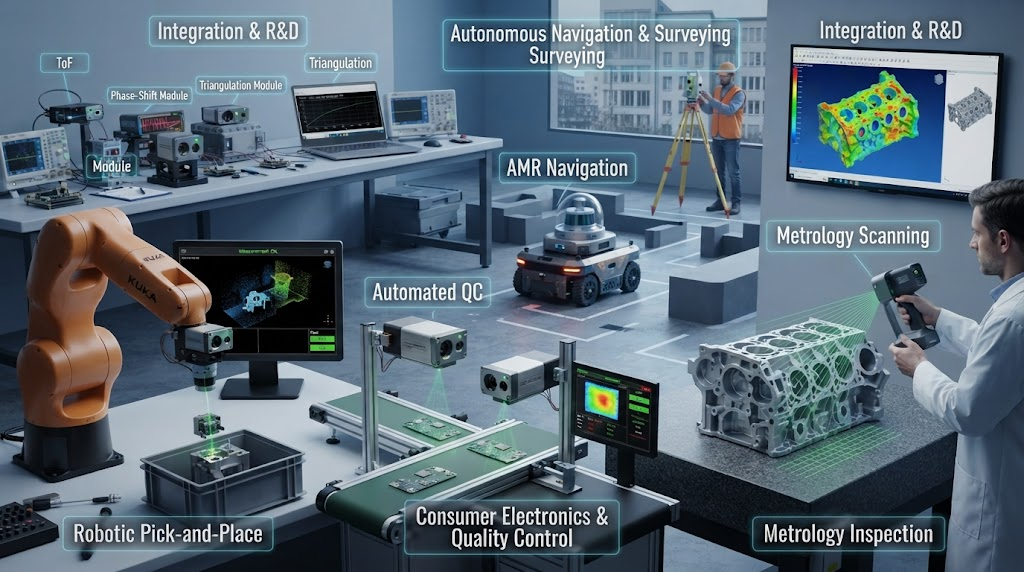
Robotics and Autonomous Navigation: Guiding Intelligent Systems
In robotics, laser ranging modules are indispensable. They provide the spatial awareness needed for robots to navigate complex environments, avoid obstacles, and interact precisely with their surroundings.
LiDAR (Light Detection and Ranging) systems, often built around multiple laser ranging modules, enable simultaneous localization and mapping (SLAM). This allows autonomous vehicles (AGVs), industrial robots, and even service robots to build real-time maps of their environment while simultaneously determining their own position within that map.
For instance, in warehouse automation, AGVs use these sensors for precise lane keeping and collision prevention, significantly enhancing safety and efficiency. This is a prime example of advanced sensor technology at work.
Drone Altimetry and Mapping: Precision from the Sky
Drone technology relies heavily on laser ranging for accurate altitude measurement (altimetry) and terrain following. A precise laser altimeter ensures stable flight, especially in challenging environments or during autonomous landing procedures.
Beyond simple altitude, multi-beam laser ranging modules enable high-resolution 3D mapping and aerial surveying. They generate detailed point clouds, crucial for creating accurate digital elevation models, infrastructure inspection, and agricultural analysis. For superior aerial data collection, consider pairing these with high-quality Drone Camera Solutions.
Case Study Snippet: A recent project involved integrating a Stalaser pulsed laser module into a heavy-lift inspection drone for power line monitoring. The module’s long-range accuracy (±5cm at 200m) allowed for consistent terrain following over varied landscapes, significantly improving data capture reliability compared to traditional GPS-only altimeters. This led to a 30% reduction in mission re-flights.
Industrial Automation and Level Sensing: Enhancing Efficiency
In industrial automation, laser ranging modules are workhorses. They perform critical tasks like non-contact level measurement in tanks and silos, ensuring raw material supply or preventing overflows.
They are also used for precise positioning of machinery, detecting the presence or absence of parts on assembly lines, and optimizing material handling systems. This directly translates to enhanced efficiency and reduced waste in factory sensors and process control.
For example, a laser distance sensor can monitor the fill level of granular materials in a hopper, sending real-time data to a central control system for automated replenishment. [Internal Link: Industrial Process Sensors -> /industrial-sensors]
Security and Surveillance Systems: Advanced Detection
Laser ranging modules bolster security systems by offering advanced detection capabilities. They can establish invisible perimeters, triggering alarms upon intrusion detection with high accuracy, minimizing false positives.
These modules are also used for object tracking, monitoring the movement of vehicles or individuals within a defined zone, and augmenting traditional surveillance technology. Their ability to operate in low light or complete darkness makes them invaluable.
For comprehensive security, pair these ranging capabilities with robust Laser Warning Systems. This combination provides both active ranging and defense against laser threats. For specialized defense, explore TACTICAL WEARABLE LASER WARNING SYSTEM options.
Automotive ADAS: The Future of Driving Safety
The automotive industry is a major driver for laser ranging innovation, particularly in Advanced Driver-Assistance Systems (ADAS). LiDAR technology, at its core, uses numerous laser ranging modules to create a real-time, high-resolution 3D map of the vehicle’s surroundings.
This enables critical functionalities like collision avoidance, adaptive cruise control, lane-keeping assistance, and pedestrian detection. As autonomous driving continues to evolve, LiDAR is becoming an indispensable component for robust environmental perception, complementing camera and radar systems.
The push for safer and more autonomous vehicles ensures continuous development in compact, high-performance LiDAR solutions. [Internal Link: Automotive LiDAR Solutions -> /automotive-lidar]
Integration Considerations and Challenges
Integrating a laser ranging module isn’t always plug-and-play. Successful implementation requires careful attention to several technical details.
Key areas include ensuring compatible electrical interfaces (voltage levels, current draw), establishing reliable software protocols for data communication, and robust mechanical mounting to maintain alignment and prevent vibration. Calibration is also paramount to ensure consistent accuracy after installation.
Environmental factors can present challenges. For outdoor applications, protecting the module from dust, moisture, and extreme temperatures is crucial. Stalaser.com often provides detailed integration guides and support to help overcome these hurdles. [Internal Link: Sensor Integration Best Practices -> /sensor-integration-guide]
Future Trends and Emerging Technologies in Laser Ranging
The field of laser ranging is dynamic, with exciting advancements on the horizon in 2026 and beyond. We’re seeing a rapid evolution driven by demand for greater performance and broader applications.
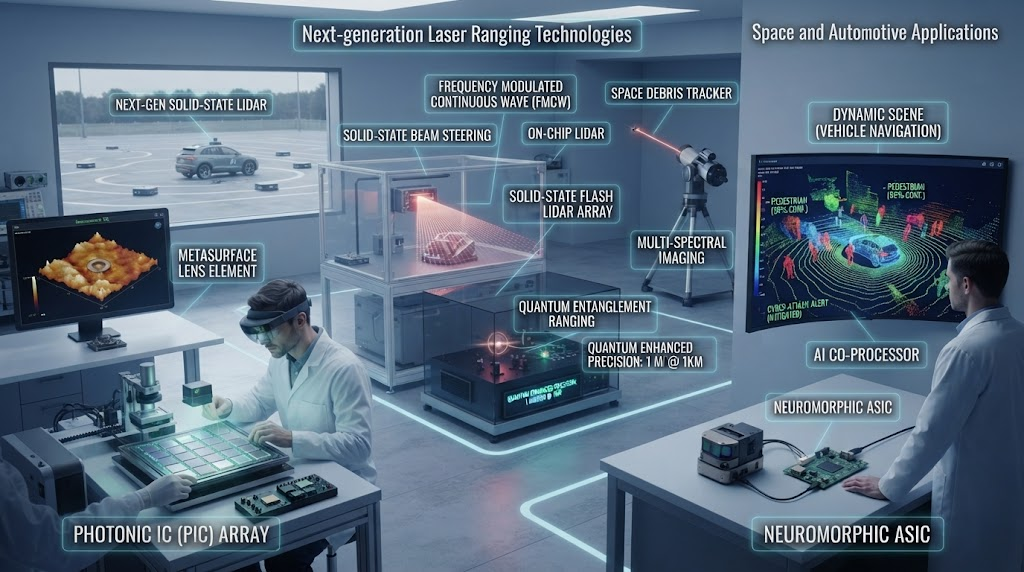
One significant trend is the rise of solid-state LiDAR. Unlike traditional mechanical LiDAR, which uses rotating mirrors, solid-state designs have no moving parts. This promises increased reliability, lower cost, smaller form factors (miniaturization), and higher durability for mass-market adoption in automotive and consumer electronics.
Further advancements include enhanced environmental robustness, with modules designed to perform reliably in adverse weather conditions like heavy rain or fog. AI in sensors is also emerging, where artificial intelligence processes raw laser data to filter noise, classify objects, and predict trajectories with greater accuracy and speed. These emerging technologies will redefine measurement systems.
Frequently Asked Questions About Laser Ranging Modules
Here are some common queries regarding laser ranging modules, their performance, and safe operation.
What is the difference between active and passive laser ranging?
Active laser ranging systems emit their own light (laser beam) to measure distance, such as Time-of-Flight or Phase-shift modules. Passive systems, in contrast, rely on ambient light or external light sources and typically analyze reflected patterns or shadows. Most high-precision laser ranging modules are active devices.
How does environmental interference affect laser module performance?
Environmental factors like fog, rain, snow, and heavy dust can significantly scatter or absorb laser light, reducing the effective range and accuracy. Strong direct sunlight can also interfere with the sensor’s receiver. Modern modules often incorporate advanced filtering and signal processing to mitigate these effects, but performance can still degrade under severe conditions.
Are laser ranging modules safe for human eyes?
Most commercial laser ranging modules are designed to be eye-safe, typically falling into Class 1 or Class 1M according to international laser safety standards (IEC 60825-1). However, higher-power industrial or military-grade lasers may be Class 3R, 3B, or 4 and require strict safety precautions. Always check the laser classification in the product datasheet and follow all recommended safety guidelines to ensure eye safety.
What are the typical wavelengths used and why?
Common wavelengths include 905nm and 1550nm (infrared) for long-range and outdoor applications, as they are less visible and can offer better eye safety at higher power. Red visible lasers (around 635-650nm) are often used for shorter-range industrial sensors where a visible spot helps with alignment and targeting. The choice of wavelength impacts penetration through atmospheric particles and interaction with different materials.
Partner with Us for Advanced Laser Ranging Solutions
Choosing the right laser ranging module is a critical decision that impacts the success of your project. At Stalaser.com, we understand the nuances of this technology and its diverse applications.
Whether you’re developing cutting-edge robotics, enhancing drone capabilities, or optimizing industrial processes, our team of experts is ready to assist. We offer a comprehensive range of high-performance laser ranging modules and can provide tailored advice to meet your unique specifications.
Don’t settle for off-the-shelf if your application demands precision and reliability. Let us help you unlock the full potential of laser ranging technology.