

Key Takeaways
- A thermal camera adds an infrared view of scene temperature patterns to an FPV drone; it complements rather than replaces a visible-light camera.
- Choose a module by matching resolution, lens and field of view, NETD, frame rate, interface, latency, weight and power to the complete aircraft and video system—not by resolution alone.
- Thermal images can help in lawful civil uses such as search and rescue, infrastructure inspection and emergency response, but they do not see through walls or ordinary glass, and performance changes with scene and weather conditions.
- Before ordering, test the camera, power supply, video link, display and recording chain together, and confirm the exact model revision and datasheet.
What a thermal camera adds to an FPV drone
A thermal imaging camera for an FPV drone detects infrared energy and renders temperature differences as an image. It can provide useful scene information when visible-light detail is limited by darkness or smoke, while a conventional FPV camera generally supplies more familiar color and texture information when there is enough visible light. Neither image type answers every question on its own. Thermal and visible cameras show different parts of a scene and should be selected for the task, environment and operator display.
Here, “reconnaissance” means authorized preliminary observation for civil tasks such as inspection, search and rescue or emergency response. Thermal imaging is an added sensing channel—not automatic detection, identification or decision-making. An operator still needs to interpret the image, understand what the sensor can measure, and combine it with other information where the task requires it.
Where thermal imaging can support aerial observation
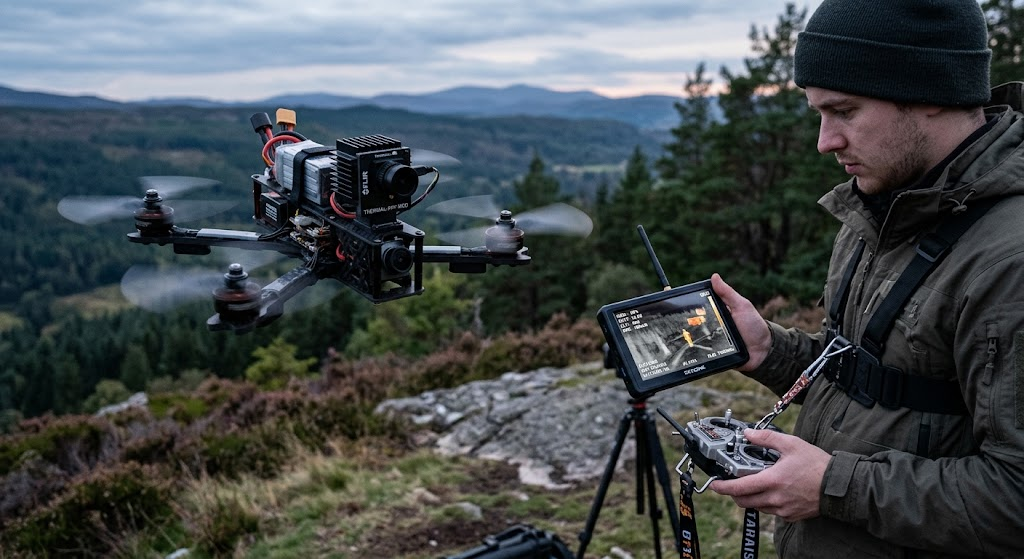
Use-case fit depends on the aircraft, camera, environment and operating authorization. Examples of civil applications include:
- Search and rescue: thermal imagery can give a search team an additional way to review temperature patterns in an area. It does not guarantee that a person will be visible; background temperature, cover, distance and camera configuration all matter.
- Infrastructure and utility inspection: a thermal view can help crews look for temperature anomalies on accessible equipment or structures. A thermal image is a screening aid, not a diagnosis; follow-up inspection and measurement procedures may be required.
- Fire and emergency response: responders may use thermal images to review heat patterns and support situational awareness. Smoke, moisture and changing scene conditions can affect image quality, so do not treat the camera as an all-weather sensor.
- Environmental and land management: authorized surveys may use thermal information to observe surface heat patterns, subject to privacy, wildlife, aviation and site requirements.
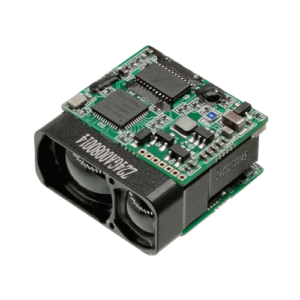
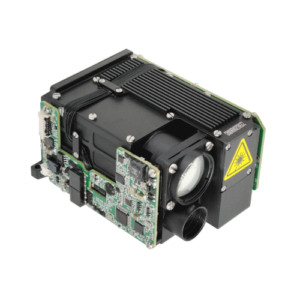
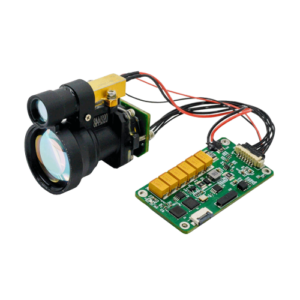
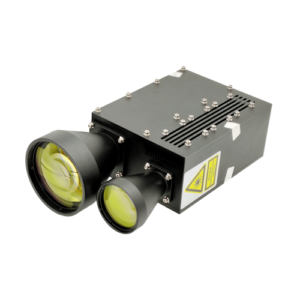
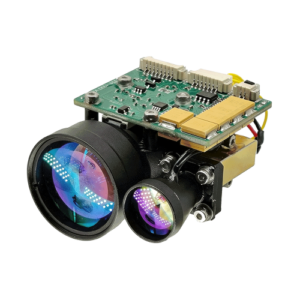
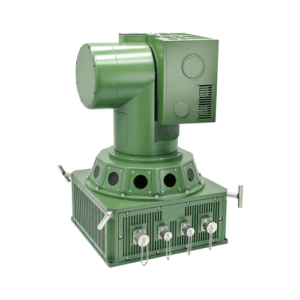
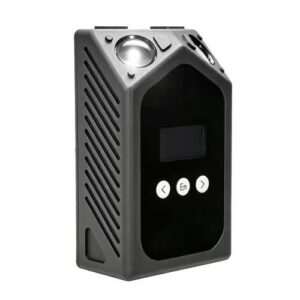
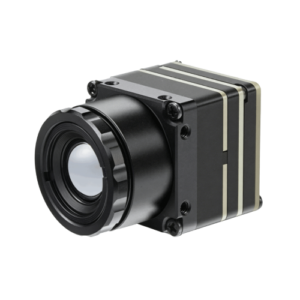
Thermal systems appear in many drone configurations, from small embedded modules to stabilized enterprise payloads. The right setup depends on the required image, aircraft capacity and data path. STALASER describes its FPV thermal camera range for aircraft integration; review the exact model page and current datasheet rather than assuming that every listed module shares the same features.
Five criteria for choosing an FPV thermal camera
1. Resolution and pixel pitch
Thermal resolution is the number of detector samples in the image. A higher pixel count can provide more spatial detail, but it does not set a usable detection distance by itself. Lens focal length, field of view, target size, viewing conditions, image processing and display also influence what an operator can distinguish. Pixel pitch describes the spacing of detector elements; use it together with the sensor and lens data, not as a stand-alone quality score.
2. NETD and measurement conditions
NETD, or noise-equivalent temperature difference, describes a thermal detector’s ability to distinguish small temperature differences under stated test conditions. A lower NETD generally indicates greater thermal sensitivity, but compare values only when the measurement conditions and system configuration are comparable. NETD does not alone establish accuracy, range or whether a specific object will be detected.[1]
3. Lens, focal length and field of view
Field of view (FOV) describes how much of the scene fits into the image. A wider view covers more area at once; a narrower view places more of the image across a smaller angular scene. Match the lens to the aircraft’s observation task and expected viewing distance. Check both horizontal and vertical FOV, focal length, focus range and whether the lens can be changed on the selected module.
4. Frame rate, output and end-to-end latency
Frame rate tells you how frequently images are output; it is not the same as end-to-end latency. Processing, encoding, analog or digital transmission, receiver and display can all add delay. Confirm the supported rate for the exact interface and operating mode, then measure the whole camera-to-display chain on the intended aircraft. Also verify connector pinout, signal format, control protocol and whether the system records video, thermal measurements or both.
5. Size, weight and power (SWaP)
Compare module weight with the lens and required cables or carrier boards included. Confirm input-voltage range, typical and peak power, connector availability, mounting geometry and space for airflow or heat dissipation. Then account for the camera in the aircraft’s payload limit and balance. A camera-only weight is not the same as total installed payload weight.
As a concrete example, the current STALASER FPV Thermal Imaging Camera product page lists a 640 × 512 VOx uncooled sensor, 12 μm pixel size, a 9.1 mm lens with 45.8° horizontal and 37.3° vertical FOV, 25/50 Hz output, optional UVC/MIPI digital interfaces, PAL analog video, UART control, 26.3 ± 0.5 g including lens, and power consumption of up to 0.75 W. These are manufacturer-published specifications for that page’s listed configuration, not universal FPV thermal-camera requirements. Confirm the current datasheet, included accessories, interface variant and exact model identifier before purchase.
Thermal vs. visible vs. dual-sensor imaging
These imaging options differ in the signal they record and the questions they can answer. A hybrid system can combine views, but adds integration and data-path decisions.
| Imaging option | What it contributes | Key limitation | Check during selection |
|---|---|---|---|
| Thermal camera | Infrared patterns associated with surface temperature differences; useful when visible illumination is limited | Does not provide ordinary color texture and cannot see through walls or ordinary glass; environment affects results | Resolution, NETD conditions, lens/FOV, output format, latency and any radiometric-data requirement |
| Visible-light FPV camera | Color, edges, surface detail and familiar scene context when enough visible light is available | Image quality depends on illumination, exposure and the visible camera’s low-light performance | Resolution, FOV, minimum illumination, latency, video format and compatibility with the airframe system |
| Dual thermal and visible payload | Two complementary image sources that may support scene interpretation | More weight, power, mounting, alignment and display/recording integration to validate | Total payload weight, synchronization, calibration, video routing, power budget and operator workflow |
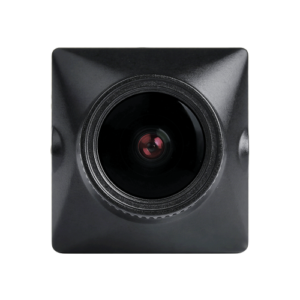
STALASER also lists a separate visible-light FPV camera. A separate camera is not proof of a combined dual-sensor payload; confirm mounting, synchronization and display support with the system integrator.
FPV integration checklist
Before a prototype or production order, ask the camera supplier and aircraft integrator to confirm the following against the same configuration:
- Mechanical fit: drawings, mounting points, lens clearance, cable bend radius, vibration isolation and total installed weight.
- Electrical fit: input voltage, startup and peak current, grounding, connector pinout, power noise and thermal management.
- Video path: analog or digital output, supported resolution and frame rate, protocol, encoding/decoding, end-to-end latency and recording format.
- Control and image behavior: focus setting, image orientation, calibration or non-uniformity correction behavior, palette controls, and whether remote control is available through the documented interface.
- Acceptance test: review representative output in the actual aircraft, radio link, receiver and display. Test normal and low-contrast scenes relevant to the authorized application; record the configuration and observed results.
Do not infer radiometric temperature measurement from a thermal video feed alone. If an application needs calibrated temperature values, confirm that the exact camera version provides radiometric output, what data is available, and what calibration and analysis workflow is supported.
Limitations, testing and responsible operation
A thermal camera records infrared energy from surfaces; it does not make an X-ray image. It cannot see through walls or ordinary window glass. Glass and polished metal can reflect infrared radiation, which may make the displayed pattern misleading if it is interpreted as a direct view of what is behind the surface.[2]
Thermal contrast varies with materials, emissivity, reflected energy, background temperature, weather and time of day.[4] Fog and rain can reduce range or image clarity. Smoke performance depends on the smoke and environment; do not treat a module as guaranteed to see through every obscurant or as an all-weather sensor.[2] For measurement tasks, validate the camera’s radiometric capability and calibration rather than relying on color palettes, which are visual renderings of the sensor data.
Use the aircraft only for authorized, lawful operations. Aviation rules, privacy obligations, data-retention requirements and restrictions on sensitive sites vary by jurisdiction. In the United States, commercial small-drone operators should check the FAA’s current Part 107 requirements and any applicable airspace authorization; other countries have their own rules.[3]
Frequently asked questions
Can a thermal camera replace a standard FPV camera?
Not in every application. Thermal imaging shows infrared patterns linked to surface temperature, while a visible-light camera shows color and surface detail. Choose one or both according to the task, lighting conditions and aircraft integration requirements.
Does a higher thermal resolution always mean better results?
No. Resolution is one part of system performance. Lens, field of view, sensitivity, frame rate, processing, image transmission, viewing conditions and the size of the feature being observed also affect the result.
What is NETD, and why should an integrator compare it?
NETD is a measure of thermal sensitivity: the smaller the stated temperature difference, the more subtle a contrast the detector can distinguish under the specified test conditions. Compare NETD only when test conditions are stated and similar, and do not treat it as a guarantee of detection distance.
What should I verify before buying a thermal module for an FPV drone?
Verify the current model and datasheet, resolution, lens and FOV, NETD test conditions, frame rate, video interface, control protocol, input voltage, power draw, total installed weight, mounting and end-to-end latency. Test the complete camera-to-display chain before scaling to production.
References
- Teledyne FLIR OEM, “Comparing Sensitivity of Thermal Imaging Camera Modules.” Guidance on NETD, resolution, sensitivity and cooled/uncooled design tradeoffs.
- FLIR, “Can Thermal Imaging See Through Walls? And Other Common Questions.” Explains limits involving walls, glass, fog, rain and reflected infrared energy.
- Federal Aviation Administration, “Certificated Remote Pilots including Commercial Operators.” U.S.-specific commercial small-UAS guidance.
- DJI Enterprise, “The Basics of Thermal Drones.” Overview of thermal drone applications, image interpretation and surface emissivity considerations.
Discuss an FPV thermal camera integration
Share the aircraft’s payload limit, power input, required video interface, lens/FOV needs and application conditions when requesting product guidance. Confirm the selected model and current specification sheet before final design or purchase.